
0
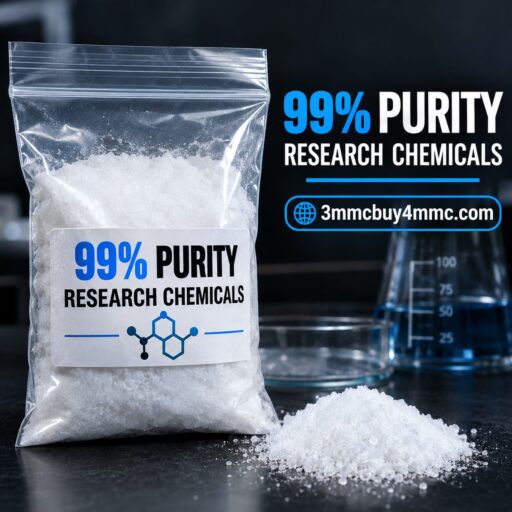
Buy 3-CMC Crystal Chunks
Price range: €45.00 through €3,100.00
| Feature | Details |
|---|---|
| Brand | Research Chemical Grade 3-CMC |
| Composition / Ingredients | 3-Chloromethcathinone (3-CMC) |
| Form / Appearance | Crystal Chunks |
| Purity | ≥99% (Analytically Verified) |
| Duration of Effects | Laboratory-observed; depends on experimental protocol |
| Indications / Usage Areas | Neuropharmacology, behavioral studies, analytical research |
| Application Method | Laboratory measurement, solution preparation |
| Shelf Life | 2–3 years |
| Storage Conditions | Cool, dry place (2–25°C), away from light |
| Package Contents | 1 x 5g / 10g / 20g depending on selection |
| Country of Origin | Netherlands |
| Licensing / Certification | EU & FDA-approved laboratory-grade production |
| Safety Notes / Side Effects | Research use only, follow lab safety protocols, avoid human consumption |
Description
Why Qualified Laboratories Buy 3-CMC Crystal Chunks.
Analytical research depends heavily on chemical homogeneity and verifiable molecular structure. 3-CMC (3-Chloromethcathinone) is a substituted cathinone derivative widely analyzed within neuropharmacology, toxicological screening, and receptor binding profiles. When research teams elect to Buy 3-CMC Crystal Chunks, they receive a highly defined crystalline matrix engineered to minimize oxidation and structural degradation compared to fine powders or unrefined solutions.
At 3mmcbuy4mmc.com, we eliminate the uncertainty inherent in the research chemical marketplace. By enforcing batch-level nuclear magnetic resonance (NMR) spectroscopy and high-performance liquid chromatography (HPLC) auditing, we ensure every crystal chunk delivers uniform molecular weight, consistent melting point dynamics, and predictable analytical spectra across gas chromatography-mass spectrometry (GC-MS) runs.
How It Works: Molecular Kinetics and Pharmacological Mechanics
Understanding the pharmacodynamic and chemical behavior of 3-CMC requires an examination of its phenethylamine and cathinone core structure. As a chlorinated derivative of methcathinone, 3-CMC features a chlorine atom substitution at the meta-position of the phenyl ring.
Key Chemical Specifications & Structural Parameters
-
Systematic IUPAC Name: 1-(3-chlorophenyl)-2-(methylamino)propan-1-one
-
Molecular Formula: C10H12ClNO
-
Molar Mass: 197.66 g/mol
-
Form Factor: Solid crystalline matrix (High-density chunks)
-
Purity Threshold: $\ge 99.0\%$ certified via HPLC
In vitro binding assays indicate that substituted cathinones interact directly with monoamine transporters, specifically targeting the dopamine transporter (DAT), norepinephrine transporter (NET), and serotonin transporter (SERT). The meta-chlorine substitution influences monoamine reuptake inhibition profiles and transmitter efflux rates, making 3-CMC an essential comparative standard alongside other substituted cathinones, such as 3-MMC and 4-MMC.
Extraordinary Benefits: Crystalline Homogeneity in Analytical Protocols
Selecting high-grade crystalline chunks over pulverulent formats offers distinct technical advantages in laboratory environments:
-
Reduced Surface Area Degradation: Crystalline structures limit exposure to ambient oxygen, humidity, and light, preserving chemical stability during extended handling.
-
Precise Gravimetric Dosing: Solid chunks simplify accurate mass measurements, avoiding static electrical repulsion common in lightweight powders during micro-balance weighing.
-
Spectroscopic Clarity: High purity levels yield clean, well-defined baseline signals in NMR and UV-Vis spectroscopy without interfering solvent residues or manufacturing impurities.
-
Reproducible Mass Spectrometry Runs: Guarantees sharp retention peaks and consistent fragmentation patterns in quantitative bioanalysis.
Target Applications: Who Depends on Reference-Grade 3-CMC?
Our high-purity reference materials are distributed strictly to licensed research laboratories, forensic toxicologists, academic institutions, and bioanalytical facilities. Primary fields of inquiry include:
-
Neurochemical Binding Assays: Investigating monoamine transporter affinity and intracellular transporter-mediated currents.
-
Forensic Toxicological Profiling: Establishing reference spectral libraries for law enforcement, urine/blood assay validation, and drug screening workflows.
-
Structure-Activity Relationship (SAR) Studies: Mapping how halogen substitution positions (meta vs. para) alter transporter selectivity and potency.
-
Metabolic Pathway Mapping: Analyzing hepatic CYP450 enzyme-mediated metabolism and phase I/II metabolite formation in vitro.
Additional information
| Quantity in grams | 5grams, 10grams, 25grams, 50 grams, 100grams, 250grams, 500grams, 1000grams |
|---|
Related products
-
Buy 2-FMA Pure Powder
Price range: €45.00 through €1,200.00 Select options This product has multiple variants. The options may be chosen on the product page -
2-MMC Crystal Chunks
Price range: €45.00 through €3,600.00 Select options This product has multiple variants. The options may be chosen on the product page -
Buy 2F-Ketamine Spray 15%
Price range: €55.00 through €410.00 Select options This product has multiple variants. The options may be chosen on the product page -
Buy 2C-B-FLY Pellets – 10mg
€35.00 Add to cart
Reviews
There are no reviews yet.